

How a Digital Marketing Strategist Can Transform Your Brand
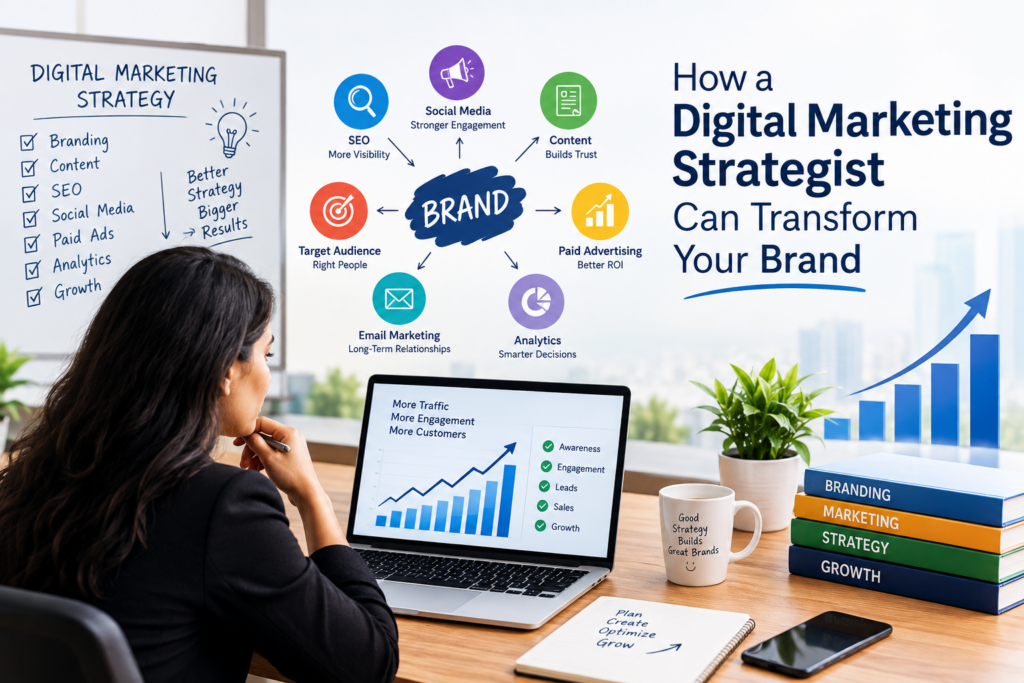
In today’s highly competitive digital world, building a successful brand requires much more than simply having a website or posting regularly on social media. Consumers have more choices than ever before, and they expect brands to be visible, relevant, trustworthy, and consistent across every digital platform. This is where a digital marketing strategist can make a significant difference. A digital marketing strategist brings together creativity, research, data, technology, content, search engine optimization, social media, advertising, and customer insights to create a clear marketing direction for a brand. Instead of approaching digital marketing as a collection of separate activities, a strategist looks at the complete customer journey and develops a strategy that connects every digital touchpoint with the brand’s larger business goals. With the right strategy, a brand can improve its visibility, attract the right audience, build stronger relationships, increase conversions, and create long-term growth.
One of the first ways a digital marketing strategist can transform a brand is by creating a clear and consistent digital identity. Many businesses have good products or services but struggle to communicate what makes them different. Their website may have one message, their social media pages may use another tone, and their advertisements may focus on completely different benefits. This inconsistency can make it difficult for customers to understand what the brand represents. A digital marketing strategist studies the business, its competitors, target audience, values, products, and unique selling points to develop a stronger brand direction. This includes deciding how the brand should communicate, what type of content it should create, which platforms it should prioritize, and what message should remain consistent throughout the customer journey. When customers repeatedly experience the same clear identity across different platforms, the brand becomes easier to recognize and remember.
Understanding the target audience is another important area where a digital marketing strategist can transform a business. Effective marketing is not about reaching everyone; it is about reaching the right people with the right message at the right time. A strategist researches customer interests, online behavior, needs, challenges, search habits, purchasing decisions, and preferences. This information helps the brand develop detailed audience profiles and understand what motivates potential customers. For example, a business may discover that its audience does not respond strongly to traditional promotional content but engages more with educational videos, customer stories, tutorials, or problem-solving content. Instead of continuing to spend resources on ineffective campaigns, the strategist can adjust the marketing approach based on actual audience behavior. This makes communication more relevant and increases the possibility of turning attention into meaningful engagement.
A strong digital marketing strategy also helps a brand improve its online visibility. Having a website does not automatically mean that customers will find it. Search engines, social media platforms, online directories, video platforms, and other digital channels all influence how people discover businesses today. A digital marketing strategist identifies the platforms where the target audience is most active and develops a strategy to improve the brand’s presence on those channels. Search engine optimization can help a website appear for relevant searches, while social media marketing can increase brand awareness and encourage conversations. Content marketing can establish expertise, and digital advertising can provide faster visibility among carefully selected audiences. By connecting these activities instead of treating them as independent campaigns, a strategist can create a stronger digital presence that supports the brand consistently.
Content plays a central role in modern digital marketing, and a strategist can help transform content from simple promotional material into a valuable communication tool. Many businesses make the mistake of constantly talking about their products without addressing what their audience actually wants to know. Customers are often looking for answers, solutions, inspiration, comparisons, guidance, and proof before making a purchase decision. A digital marketing strategist can develop a content strategy based on these needs. Blog articles, social media posts, videos, infographics, case studies, customer testimonials, guides, email campaigns, and other formats can be used to educate and engage the audience. The objective is not simply to publish more content but to publish content with a clear purpose. Every piece of content should contribute to awareness, consideration, trust, conversion, or customer retention.
Another major transformation comes from using data to make better marketing decisions. Digital marketing provides businesses with access to a large amount of information, including website traffic, engagement rates, search performance, advertising results, conversion rates, customer behavior, and campaign performance. However, having data is not the same as knowing how to use it. A digital marketing strategist analyzes this information to identify what is working, what is underperforming, and where opportunities exist. If a particular advertisement receives many clicks but very few conversions, the problem may not be visibility but the landing page, offer, messaging, or audience targeting. If a blog receives significant organic traffic but generates little engagement, the content may need a stronger call to action. By studying these patterns, the strategist can continuously improve campaigns rather than relying on assumptions.
A digital marketing strategist can also transform the way a brand approaches social media. Social media is no longer simply a place to publish promotional announcements. It has become an important environment for discovery, communication, community building, customer service, and brand storytelling. A strategist determines which platforms are most suitable for the business and develops a content approach that matches the behavior of users on each platform. Instead of copying the same post everywhere, the brand can create platform-specific content while maintaining a consistent identity. Engaging videos, informative posts, behind-the-scenes content, customer stories, educational content, polls, discussions, and interactive formats can all contribute to stronger relationships with the audience. Over time, consistent and meaningful social media communication can help transform a business from an unfamiliar company into a recognizable and trusted brand.
Paid advertising is another area where strategic thinking can make a major difference. Simply spending more money on advertising does not guarantee better results. A strategist focuses on targeting, positioning, creative messaging, landing pages, audience segmentation, budget allocation, and performance measurement. Different customers may be at different stages of the buying journey, so they should not always receive the same advertisement. Someone discovering the brand for the first time may need educational content, while someone who has already visited the website may respond better to a specific offer or product demonstration. By creating campaigns around different stages of the customer journey, a digital marketing strategist can make advertising more relevant and improve the efficiency of marketing investment.
The customer journey itself is another important area of transformation. Modern consumers rarely move directly from discovering a brand to making a purchase. They may see a social media post, search for the brand online, visit the website, read reviews, compare alternatives, watch videos, ask questions, and return several times before making a decision. A strategist maps this journey and identifies opportunities to improve every stage. The goal is to ensure that customers receive useful and consistent information whenever they interact with the brand. This can include improving website navigation, creating informative landing pages, simplifying contact forms, strengthening calls to action, providing social proof, and developing follow-up communication. A smooth customer journey reduces confusion and helps potential customers move more confidently toward conversion.
Trust is also essential for long-term brand growth, and digital marketing can play a powerful role in building it. Customers are increasingly interested in what other people say about a business before making a decision. Reviews, testimonials, case studies, user-generated content, expert opinions, transparent communication, and consistent customer experiences can all influence trust. A digital marketing strategist can develop a reputation-building strategy that highlights genuine customer experiences and demonstrates the value of the brand. Rather than simply claiming that a business is the best, the strategy focuses on providing evidence that helps customers make informed decisions. Over time, this can strengthen credibility and create a more positive perception of the brand.
Another benefit of working with a digital marketing strategist is the ability to stay adaptable. Digital platforms, consumer behavior, search trends, advertising systems, and content formats continue to change. A strategy that worked extremely well in the past may not produce the same results today. Businesses that refuse to adapt can quickly lose visibility and relevance. A strategist monitors changes in the digital environment and identifies opportunities to adjust the marketing approach. This does not mean following every new trend blindly. Instead, it means understanding which changes are genuinely relevant to the brand and its audience. Strategic adaptability allows businesses to experiment, learn, and improve while maintaining a clear long-term direction.
A strategist can also help businesses make better use of their marketing resources. Many companies waste time and money because they attempt to be active on every platform or launch campaigns without clearly defining their objectives. A strategic approach prioritizes activities according to business goals, audience behavior, available resources, and expected results. This helps businesses focus on the channels and activities that are most likely to create value. Whether the goal is increasing website traffic, generating leads, improving online visibility, increasing sales, strengthening customer loyalty, or launching a new product, the marketing strategy can be designed around measurable objectives.
Ultimately, the greatest transformation a digital marketing strategist brings is a shift from random marketing activities to purposeful brand growth. Instead of asking, “What should we post today?” the business begins asking more important questions: Who are we trying to reach? What problem are we solving? Why should customers choose us? Where do they discover us? What information do they need before making a decision? Which marketing activities are producing results? How can we improve the customer experience? These questions create a more strategic mindset and help businesses make decisions based on objectives and evidence rather than guesswork.
In conclusion, a digital marketing strategist can transform a brand by bringing clarity, consistency, creativity, and measurable direction to its online marketing efforts. From understanding the target audience and developing a strong brand identity to improving search visibility, creating valuable content, managing social media, optimizing advertising, analyzing data, and strengthening the customer journey, a strategist connects different digital activities into one powerful marketing system. In an environment where consumers have countless brands competing for their attention, having a strategic digital presence can be a major advantage. The future of successful branding is not simply about being visible online; it is about being visible to the right people, communicating the right message, creating meaningful experiences, and continuously improving based on what customers and data reveal. With the guidance of a skilled digital marketing strategist, a brand can move beyond short-term attention and build a stronger digital presence designed for sustainable growth.