

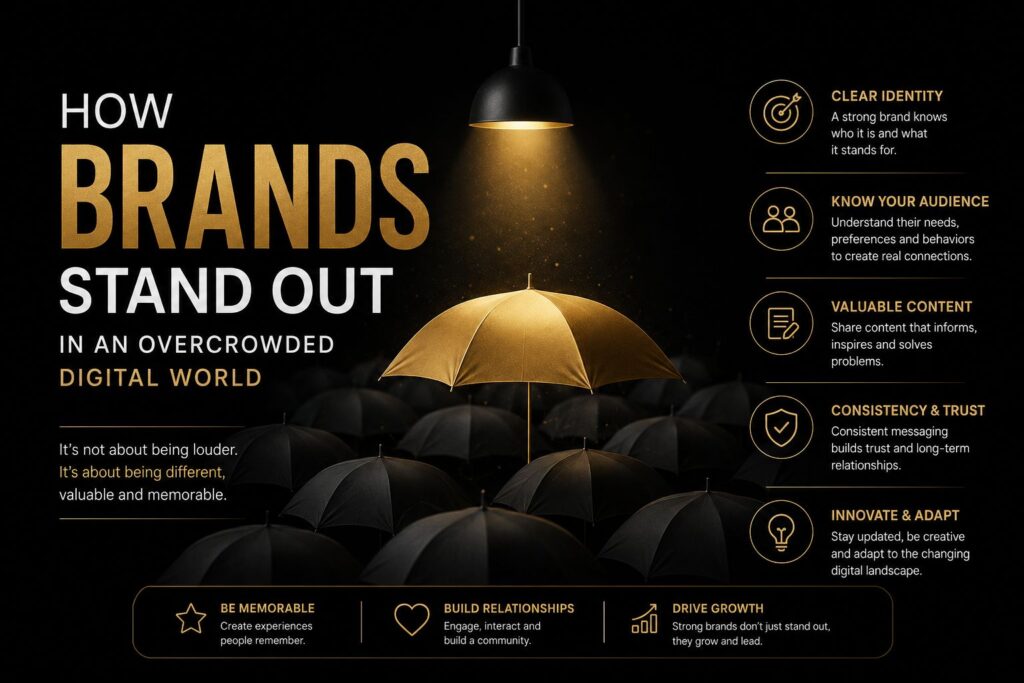
How Brands Stand Out in an Overcrowded Digital World
The digital space has made it easier than ever for businesses to reach a global audience. A small business can create a website, open social media accounts, and promote its products to people across different locations. However, this accessibility has also created intense competition. Consumers now have countless options available at their fingertips, which means brands need to work harder to capture attention and remain memorable.
Standing out does not necessarily mean being louder than everyone else. Posting more content, running more advertisements, or constantly following every trend does not always guarantee success. In many cases, brands that stand out are the ones that communicate with clarity and purpose. They understand who they are, what they represent, and why their audience should care. A strong and focused identity can often create a greater impact than simply trying to be everywhere at once.
A clear brand identity is one of the most important foundations for standing out online. Brand identity goes beyond a logo, colour palette, or attractive design. It represents the personality, values, voice, and overall experience associated with a business. When these elements are consistent, audiences can begin to recognize and remember the brand. A strong identity helps businesses create a distinct position in the minds of their audience.
Visual consistency also plays an important role in digital branding. When a brand uses consistent colours, typography, imagery, and design styles across its website and social media platforms, it creates a more professional and recognizable presence. People may not consciously notice every visual detail, but repeated exposure to a consistent style can make a brand easier to remember. Strong visual branding can therefore help businesses create familiarity in a crowded digital environment.
However, appearance alone is not enough to create a meaningful connection. Brands also need to understand the people they want to reach. One of the biggest mistakes in digital marketing is trying to communicate with everyone. When a message is designed for everyone, it often fails to connect deeply with anyone. Understanding a specific audience allows businesses to create more relevant content, products, and experiences.
Audience understanding involves more than knowing basic information such as age or location. Businesses need to understand what their audience values, what challenges they face, what motivates their decisions, and what type of content captures their attention. These insights can help brands communicate in ways that feel more personal and relevant. When people feel that a brand understands their needs, they are more likely to pay attention and engage.
Content has become one of the most powerful tools for helping brands stand out. In a digital world filled with promotional messages, valuable content can give people a reason to stop, pay attention, and remember a brand. Instead of focusing only on selling, businesses can create content that educates, entertains, inspires, or solves a problem. Helpful blogs, informative videos, engaging social media posts, and useful resources can all contribute to a stronger digital presence.
The quality of content is often more important than the quantity. Publishing content simply to remain active online may not create meaningful results. Brands should focus on creating content with a clear purpose and value for the audience. A single useful piece of content that genuinely helps people can often have a greater impact than several posts that provide little value. Strategic content helps businesses demonstrate their expertise while building credibility with their audience.
Storytelling is another powerful way for brands to differentiate themselves. People may forget facts and promotional messages, but they often remember stories and experiences. A strong brand story can communicate purpose, values, challenges, and achievements in a way that feels more human. Storytelling allows businesses to move beyond simply explaining what they sell and instead show why their brand exists and what it represents.
Authenticity has also become increasingly important in digital marketing. Modern audiences can quickly recognize communication that feels forced or overly promotional. Brands that communicate honestly and consistently are more likely to build trust. Authenticity does not mean being perfect; it means being genuine. Sharing real experiences, responding honestly to feedback, and maintaining transparency can help businesses create stronger relationships with their audiences.
Consistency is another key factor in building a memorable digital presence. A brand may have excellent content and a strong visual identity, but inconsistency can make it difficult for audiences to recognize what the brand represents. Consistent messaging across websites, social media platforms, emails, and advertisements helps create a unified experience. Every interaction should reflect the same values, personality, and overall identity.
Social media offers businesses an opportunity to create direct relationships with their audiences. However, simply having an account on every platform is not enough. Brands need to understand where their audience spends time and how they prefer to communicate. A focused strategy on the right platforms can often be more effective than trying to maintain a presence everywhere without a clear purpose.
Engagement is particularly important for standing out on social media. Businesses should not treat social platforms as one-way broadcasting channels. Responding to comments, answering questions, and participating in conversations can make a brand feel more accessible. Meaningful interaction can transform followers into a community and help businesses develop stronger connections with their audience.
Customer experience can also become a powerful differentiator. Every interaction a person has with a brand contributes to their overall perception. A confusing website, slow response, or inconsistent communication can negatively affect trust, while a smooth and helpful experience can create a positive impression. Brands that make the customer journey simple and enjoyable are more likely to remain memorable.
Personalization can further improve the customer experience. People appreciate communication that feels relevant to their needs and interests. By understanding audience behaviour and preferences, businesses can deliver more meaningful content and recommendations. Personalization can help transform a general marketing message into a more valuable and individual experience.
Innovation is also important in a constantly changing digital environment. Consumer behaviour, technology, and online platforms continue to evolve, and successful brands need to remain adaptable. This does not mean following every new trend without purpose. Instead, businesses should identify changes that are relevant to their audience and find creative ways to use new opportunities.
Technology can help brands improve their digital strategies, but it should support rather than replace genuine human connection. Automation, analytics, and artificial intelligence can make marketing more efficient, but audiences still value authenticity and meaningful communication. The most successful brands often find a balance between using modern technology and maintaining a human approach.
Trust remains one of the strongest ways to differentiate a brand. Consumers have many choices, but they are more likely to choose businesses they consider reliable and credible. Trust can be built through transparency, consistent quality, positive customer experiences, and clear communication. Customer reviews, testimonials, and real experiences can also provide valuable proof that supports a brand’s credibility.
Standing out also requires businesses to understand what makes them different. Every brand should be able to answer an important question: why should someone choose us? The answer may be related to product quality, customer service, expertise, creativity, values, or a unique approach. Identifying this difference helps businesses create a stronger value proposition and communicate their strengths more effectively.